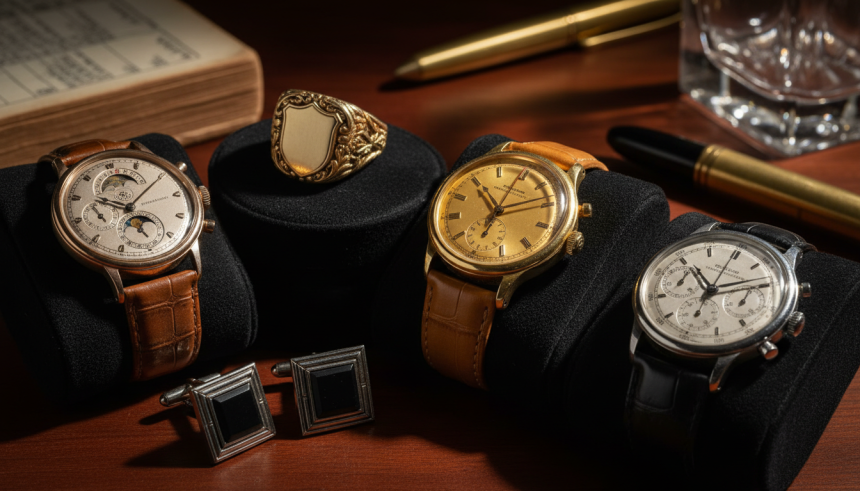
Smart wealth builders understand that luxury assets can serve dual purposes. Beyond personal enjoyment, the right pieces can appreciate in value while providing immediate utility. Men’s vintage jewelry and collectible watches represent one of the most overlooked opportunities in this space.
The transformation happening in men’s luxury consumption tells a compelling story. Where previous generations might have focused exclusively on obvious status symbols, today’s affluent men are developing more sophisticated collecting strategies. They’re applying the same analytical framework used for wine investments, art acquisition, or rare book collecting to jewelry and timepieces.
The Economics of Craftsmanship
The financial logic becomes clear when you examine what drives value in luxury markets. Mass production has diluted the exclusivity of many contemporary luxury goods. Meanwhile, vintage pieces offer genuine scarcity combined with superior construction methods that are no longer economically viable to reproduce.
Consider the materials alone. Vintage gold jewelry often contains higher purity metals than modern equivalents. Art Deco pieces from the 1920s and 1930s showcase platinum work and hand-cut gemstones that would cost exponentially more to create today. The labor hours embedded in a single vintage cufflink or signet ring can represent weeks of skilled craftwork.
Heritage brands like Cartier and Bulgari have documented auction histories that demonstrate consistent appreciation over decades. Their vintage pieces regularly outperform stock market returns, particularly when purchased intelligently at estate sales or through specialized dealers.
Portfolio Diversification Through Wearable Assets
Experienced investors recognize that hard assets provide protection against currency fluctuation and market volatility. Vintage jewelry offers unique advantages within this category. Unlike precious metals stored in vaults, these pieces remain functional and enjoyable while potentially appreciating.
The collectible watch market provides the clearest example. Vintage Rolex, Patek Philippe, and Audemars Piguet timepieces have generated returns that rival real estate in major markets. A Christie’s auction analysis shows that certain vintage watch categories have appreciated 300-500% over the past two decades.
What makes jewelry particularly attractive is the lower entry point compared to other luxury collectibles. While rare cars or fine art require substantial initial investments, exceptional vintage rings, cufflinks, or chains can be acquired for thousands rather than hundreds of thousands of dollars.
Knowledge as Competitive Advantage
The most profitable collectors develop expertise that allows them to spot undervalued pieces before they reach wider recognition. This requires understanding hallmarks, construction techniques, historical periods, and maker signatures. The learning curve creates natural barriers that keep casual buyers from competing effectively.
Savvy collectors focus on specific periods or makers, developing deep knowledge that guides their acquisition strategy. Someone specializing in mid-century Scandinavian design or Art Nouveau French pieces can identify exceptional examples that others might overlook.
Authentication expertise becomes crucial as values increase. Understanding how to verify signatures, assess condition, and recognize quality repairs versus damage can mean the difference between profitable investments and expensive mistakes.
Market Inefficiencies Create Opportunities
The vintage jewelry market remains relatively fragmented compared to stocks or bonds. Estate sales, regional auction houses, and specialized dealers often price pieces based on local demand rather than global market values. This creates arbitrage opportunities for knowledgeable buyers.
Online platforms have improved price transparency but haven’t eliminated geographic disparities. A rare Art Deco bracelet might sell for different amounts in New York versus smaller markets, creating profit potential for buyers willing to research and travel.
The generational transfer currently happening also creates opportunities. Baby boomer collections are entering the market as estates are settled, sometimes creating temporary oversupply in certain categories before institutional collectors step in.
Liquidity and Exit Strategies
Unlike some collectibles that require specialized auction houses for resale, quality vintage jewelry and watches maintain multiple exit channels. Established dealers, auction houses, private collectors, and even direct retail markets provide liquidity when needed.
The key lies in purchasing pieces with broad appeal rather than highly personal or niche items. Classic designs from recognized periods or makers tend to maintain steady demand across market cycles.
Documentation becomes essential for maintaining value. Provenance, original boxes, papers, and professional condition reports all contribute to resale potential. Smart collectors maintain detailed records and professional photographs of their pieces.
Starting Your Collection Strategy
New collectors should begin by identifying their primary motivation. Pure investment focus might lead toward documented pieces from major houses with established auction records. Personal enjoyment combined with investment potential might favor pieces that integrate well with existing wardrobe and lifestyle.
Budget allocation matters significantly. Spreading limited funds across many mediocre pieces rarely outperforms concentrating resources on fewer exceptional items. Quality consistently outperforms quantity in luxury collectibles.
Professional guidance can accelerate the learning process and prevent costly mistakes. Reputable dealers who specialize in specific periods or styles provide education along with inventory access.
The most successful collectors view their purchases as long term holds rather than quick flips. Market appreciation in luxury goods typically occurs over years or decades rather than months. Patience remains a fundamental requirement for building wealth through collectibles.
The convergence of personal style and investment strategy makes vintage jewelry and watches particularly compelling for wealth-focused individuals. These pieces provide immediate utility and enjoyment while potentially generating substantial returns over time. For those willing to develop expertise and exercise patience, the market offers genuine opportunities to build wealth through beautiful, functional objects that improve rather than depreciate with age.