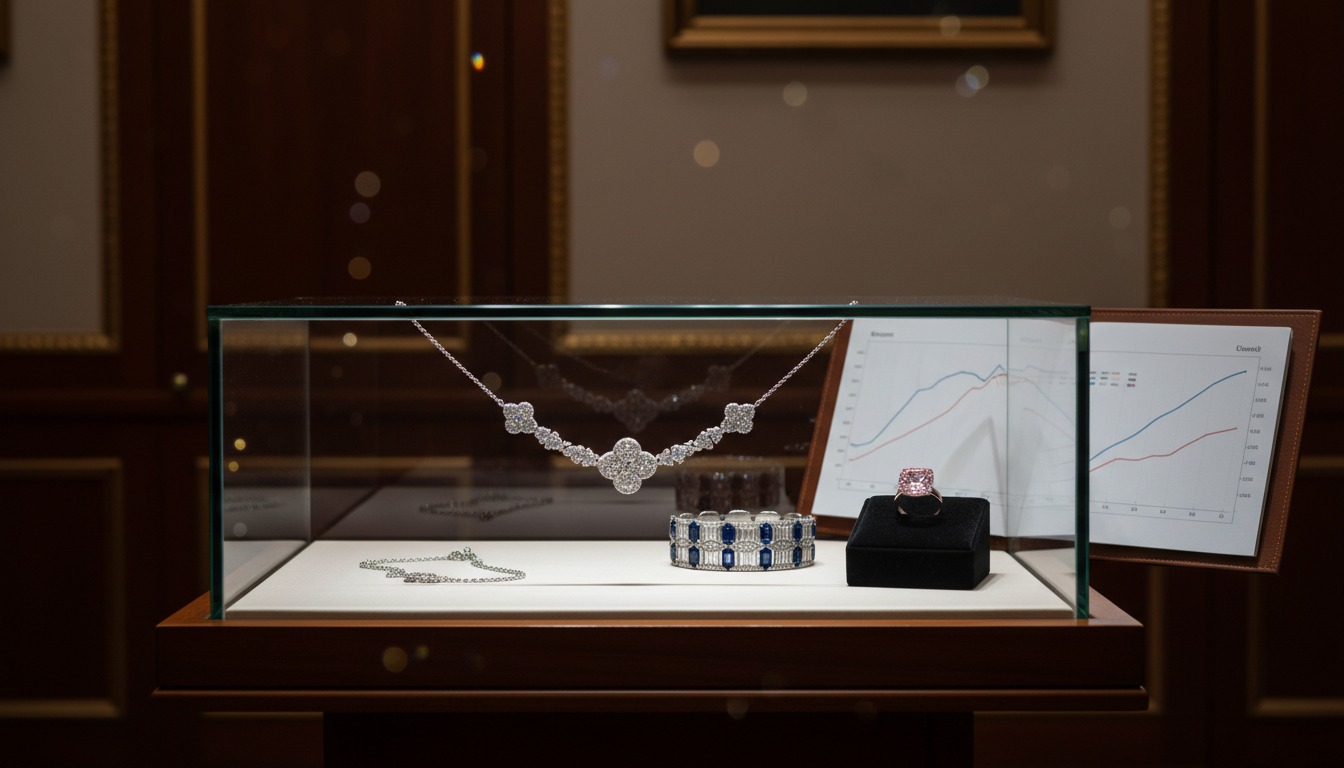
As International Women’s Day approaches, sophisticated investors are recognizing fine jewellery not merely as adornment, but as a strategic component of a diversified wealth portfolio. The global luxury jewellery market, valued at $350 billion in 2023, represents one of the most resilient alternative asset classes for high-net-worth individuals.
The Economics of Iconic Jewellery Motifs
Van Cleef & Arpels’ iconic clover motif exemplifies how brand heritage translates into investment performance. The Alhambra collection has demonstrated consistent appreciation, with vintage pieces from the 1970s commanding premiums of 300-500% over their original retail prices at auction houses like Christie’s and Sotheby’s.
Similarly, Cartier’s Trinity rings and Love bracelets have established themselves as blue-chip jewellery investments. The Trinity ring, originally created in 1924, has maintained its desirability across generations, with limited editions often doubling in value within five years of release.
Building a Strategic Jewellery Portfolio
Financial advisors increasingly recommend allocating 5-10% of investable assets to tangible luxury goods, with fine jewellery forming the cornerstone of this allocation. Key considerations include:
- Brand Provenance: Established maisons like Tiffany & Co., Bulgari, and Cartier offer superior liquidity and appreciation potential
- Gemstone Quality: Investment-grade diamonds (D-F color, FL-VVS clarity) and colored gemstones with proper certification
- Rarity and Exclusivity: Limited editions and discontinued lines often outperform regular collections
International Women’s Day: A Cultural Investment Driver
The celebration of International Women’s Day has created significant market momentum for jewellery pieces that embody empowerment and achievement. De Beers reports that self-purchase behaviour among successful women has increased by 35% over the past five years, with many viewing luxury jewellery as both personal celebration and financial strategy.
Contemporary designers are capitalizing on this trend with pieces that blend symbolism with investment potential. Infinity motifs, representing limitless possibilities, have become particularly popular among female executives and entrepreneurs.
Market Performance and Future Outlook
According to Bain & Company’s luxury market analysis, fine jewellery has outperformed traditional assets during periods of inflation, offering both hedge value and emotional satisfaction. The sector’s resilience during economic uncertainty makes it particularly attractive to wealth managers seeking non-correlated returns.
The rise of digital platforms like 1stDibs and specialized auction houses has improved market transparency and liquidity, making jewellery investment more accessible to sophisticated investors.
Estate Planning and Legacy Considerations
Beyond immediate investment returns, fine jewellery offers unique advantages in estate planning. Unlike financial instruments, jewellery carries emotional value that enhances intergenerational wealth transfer. Many wealthy families use signature pieces to maintain family identity while preserving capital.
Professional appraisals and proper insurance through specialists like Chubb ensure these assets maintain their value proposition across generations.
This International Women’s Day, consider how strategic jewellery acquisitions can serve both personal expression and portfolio diversification. From Van Cleef’s lucky clovers to infinity symbols representing unlimited potential, the right pieces can be both beautiful investments and powerful statements of financial independence.